LACORO 2020 Speakers
-
Francisco Cruz
School of IT, Deakin University, Australia
-
Kenji Doya
Neural Computation Unit, Okinawa Institute of Science and Technology Graduate University, Japan
-

Ricardo R. Gudwin
Department of Computer Engineering and Industrial Automation (DCA) of the School of Electrical Engineering and Computer Science (FEEC) at the State University of Campinas (UNICAMP), Brazil
-
Xavier Hinaut
Inria (Mnemosyne team) & Institute of Neurodegenerative Diseases, Bordeaux France
-
Sao Mai Nguyen
Flowers Team (ENSTA Paris, IP Paris & INRIA) & IMT Atlantique, France
-

Anna Helena Reali Costa
Dept. Computer Engineering and Digital Systems, Escola Politécnica of the Universidade de São Paulo (USP), Brazil
Anna is a Full Professor at the Escola Politécnica of the Universidade de São Paulo (USP), Brazil, where she also achieved her Ph.D. degree in Electrical Engineering. Before becoming a full professor,...
Anna is a Full Professor at the Escola Politécnica of the Universidade de São Paulo (USP), Brazil, where she also achieved her Ph.D. degree in Electrical Engineering. Before becoming a full professor, she was a research scientist at the University of Karlsruhe, Germany, working on computer vision and intelligent mobile robots with Prof. Dr.-Ing. Ulrich Rembold at the Institut für Prozessrechentechnik und Robotik (IPR), and at the Forschungszentrum Informatik (FZI), working on machine learning and computer vision. She was a guest researcher at Carnegie Mellon University, where she worked with Manuela Veloso in planning, execution, and learning for multi-robot applications. Today she is the head of the Computer Engineering Department and the Intelligent Techniques Research Laboratory at USP. Her research contributions are mainly in the field of Machine Learning, more specifically in Reinforcement Learning, Autonomous Agents, and Transfer Learning.
Talk Title: Scaling up Reinforcement Learning with Transfer
Abstract: Reinforcement learning is a powerful scheme to learn through direct interaction with the environment, receiving rewards and punishments. This process can be time-consuming, and the use of prior knowledge can speed it up. When people apply information, strategies, and skills they have learned to a new situation or context, transfer of learning occurs. In this talk, I will explore how the transfer of learning can be used to accelerate artificial agent reinforcement learning. I will outline approaches that allow agents to leverage experience gained from solving previous tasks and with advice from other agents. Some applications will also be presented.
-
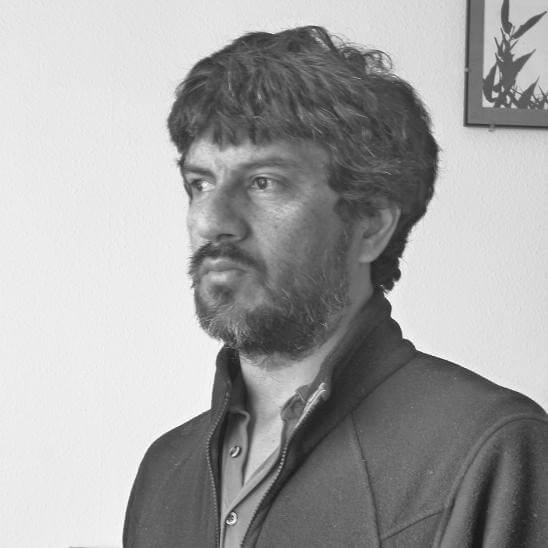
Mario Villalobos Kirmayr
School of Psychology and Philosophy, Univesidad de Tarapacá, Chile