Speakers
-
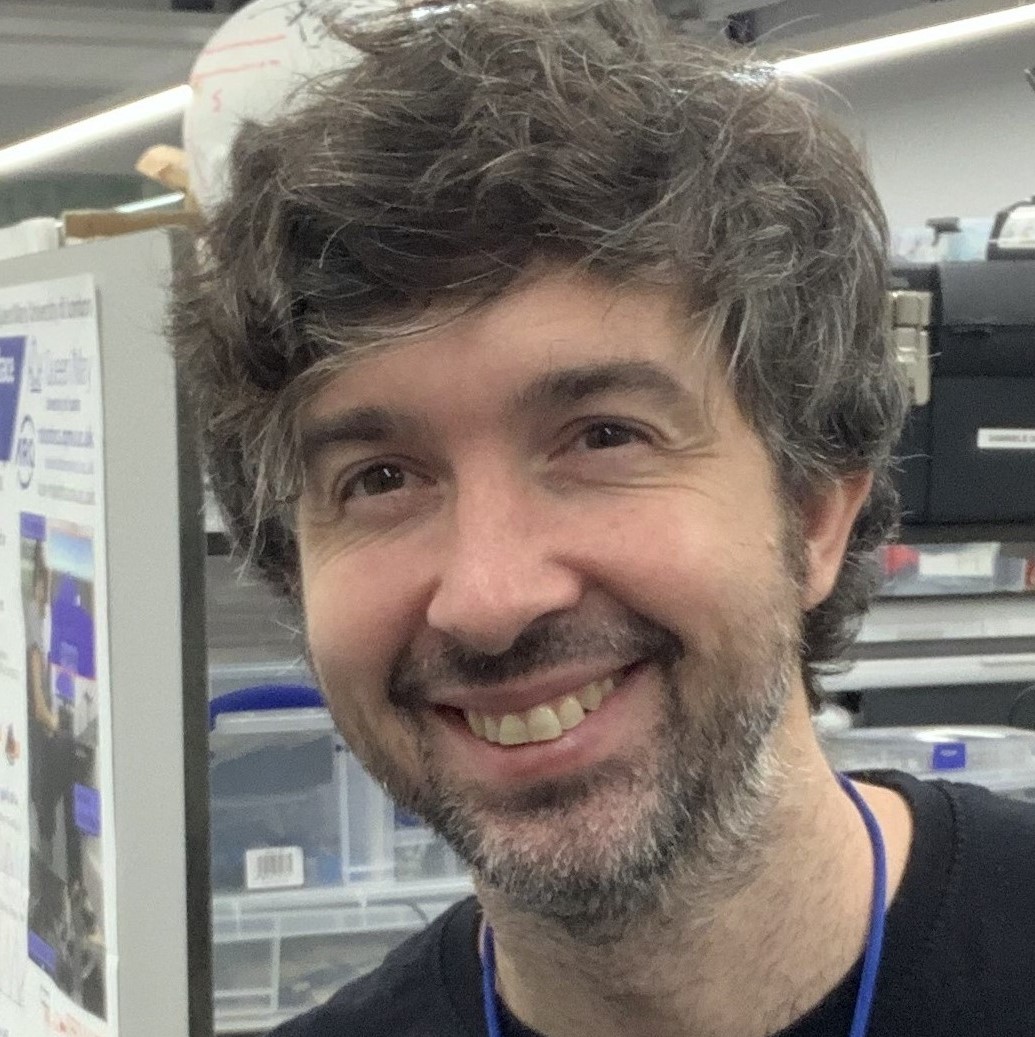
Lorenzo Jamone
University College London (UCL), UK, Computer Science Department
Lorenzo Jamone is an Associate Professor in Robotics & AI at the Department of Computer Science of University College London (UCL), where he leads the CRISP group: Cognitive Robotics and Intelligent S...
Lorenzo Jamone is an Associate Professor in Robotics & AI at the Department of Computer Science of University College London (UCL), where he leads the CRISP group: Cognitive Robotics and Intelligent Systems for the People. He received the MS degree (honors) in computer engineering from the University of Genoa (2006), and the PhD degree in humanoid technologies from the University of Genoa and the Italian Institute of Technology (2010), in Genoa (Italy). He was Associate Researcher at the Takanishi Laboratory of Waseda University (2010-2012), in Tokyo (Japan), and at the Computer and Robot Vision Laboratory of the Instituto Superior Técnico (2012-2016), in Lisbon (Portugal). He was a Lecturer (2016-2020) and then a Senior Lecturer (2020-2024) in Robotics at the Queen Mary University of London (UK), where he initially funded the CRISP group and he worked within ARQ (Advanced Robotics at Queen Mary). He has over 140 publications with an H-index of 31. His current research interests include cognitive robotics, robot learning, robotic manipulation, tactile sensing.
Talk Title: The Intelligence of the Hand
Abstract: Human dexterity remains unmatched by modern robots, yet developing more dexterous robotic systems is crucial for tackling tasks in semi-structured, unstructured, and hazardous environments. My team is dedicated to studying 'the intelligence of the hand', in humans and robots, to bridge this gap and enhance the functionality and intelligence of robotic hands. In the talk, I will share highlights from our recent work in tactile perception, haptic exploration, grasping, and manipulation, showcasing how these advancements are bringing us closer to creating truly dexterous robots, but also to understanding more about how humans use their hands in different tasks.
-
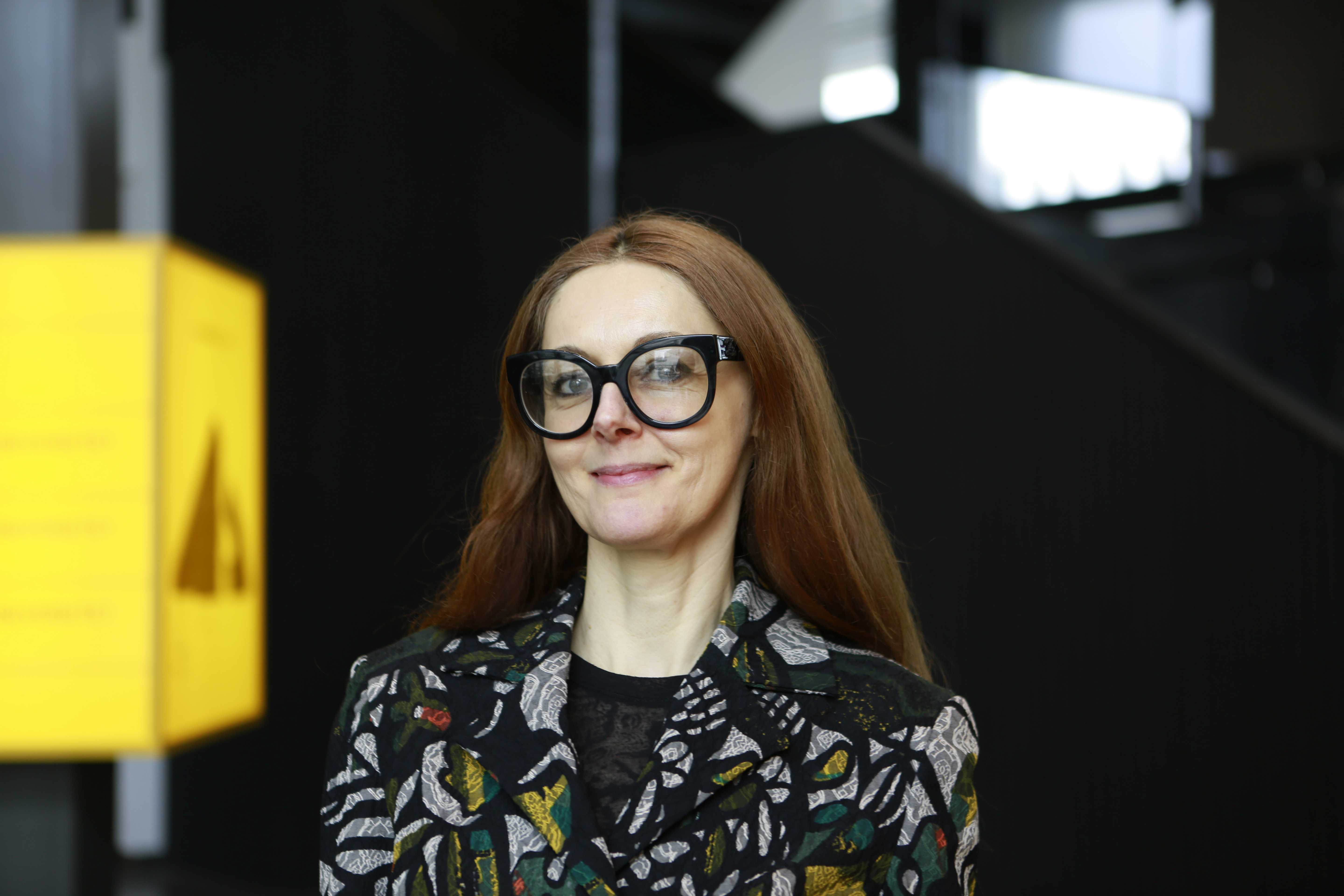
Danica Kragic (Online)
Royal Institute of Technology (KTH), Sweden
Danica Kragic is a Professor at the School of Computer Science and Communication at the Royal Institute of Technology, KTH. She received MSc in Mechanical Engineering from the Technical University of ...
Danica Kragic is a Professor at the School of Computer Science and Communication at the Royal Institute of Technology, KTH. She received MSc in Mechanical Engineering from the Technical University of Rijeka, Croatia in 1995 and PhD in Computer Science from KTH in 2001. She has been a visiting researcher at Columbia University, Johns Hopkins University and INRIA Rennes. She is the Director of the Centre for Autonomous Systems. Danica received the 2007 IEEE Robotics and Automation Society Early Academic Career Award. She is a member of the Royal Swedish Academy of Sciences, Royal Swedish Academy of Engineering Sciences and Founding member of Young Academy of Sweden. She holds a Honorary Doctorate from the Lappeenranta University of Technology and Technical Univeristy of Rijeka. Her research is in the area of robotics, computer vision and machine learning.
Talk Title: Learning for Interaction and Interaction for Learning
Abstract: Humans learn though interaction and interact to learn. Automating highly dextreous tasks such as food handling, garment sorting, or assistive dressing relies on advances in mathematical modeling, perception, planning, control, to name a few. The advances in data-driven approaches, with the development of better simulation tools, allows for addressing these through systematic benchmarking of relevant methods. This can provide better understanding of what theoretical developments need to be made and how practical systems can be implemented and evaluated to provide flexible, scalable, and robust solutions. But are we solving the appropriate scientific problems and making the neccesarry step toward general solutions? This talk will showcase some of the challenges in developing physical interaction capabilities in robots, and overview our ongoing work on multimodal representation learning, latent space planning, learning physically-consistent reduced-order dynamics, visuomotor skill learning, and peak into our recent work on olfaction encoding.
-

Heather Culbertson
University of Southern California
Heather Culbertson is a Gabilan Assistant Professor and Assistant Professor of Computer Science, Aerospace and Mechanical Engineering, and Biomedical Engineering at the University of Southern Californ...
Heather Culbertson is a Gabilan Assistant Professor and Assistant Professor of Computer Science, Aerospace and Mechanical Engineering, and Biomedical Engineering at the University of Southern California. Her research focuses on the design and control of haptic devices and rendering systems, human-robot interaction, and virtual reality. Particularly she is interested in creating haptic interactions that are natural and realistically mimic the touch sensations experienced during interactions with the physical world. Previously, she was a research scientist in the Department of Mechanical Engineering at Stanford University. She received her PhD in the Department of Mechanical Engineering and Applied Mechanics at the University of Pennsylvania in 2015. She is currently serving as General Co-Chair for IEEE Haptics Symposium. Her awards include the NSF CAREER Award, IEEE Technical Committee on Haptics Early Career Award, MassRobotics Rising Star in Robotics Award, and Ershaghi Faculty Mentorship Award.
Talk Title: Using Data for Increased Realism in Haptic Modeling and Devices
Abstract: The haptic (touch) sensations felt when interacting with the physical world create a rich and varied impression of objects and their environment. Humans can discover a significant amount of information through touch with their environment, allowing them to assess object properties and qualities, dexterously handle objects, and communicate social cues and emotions. Humans are spending significantly more time in the digital world, however, and are increasingly interacting with people and objects through a digital medium. Unfortunately, digital interactions remain unsatisfying and limited, representing the human as having only two sensory inputs: visual and auditory. This talk will focus on methods for building haptic and multimodal models that can be used to create realistic virtual interactions in mobile applications and in VR. I will discuss data-driven modeling methods that involve recording force, vibration, and sounds data from direct interactions with the physical objects. I will compare this to new methods using machine learning to make more efficient use of haptic data. I will cover projects in the areas of haptic surface modeling, mediated social touch, and haptic sensing.
-
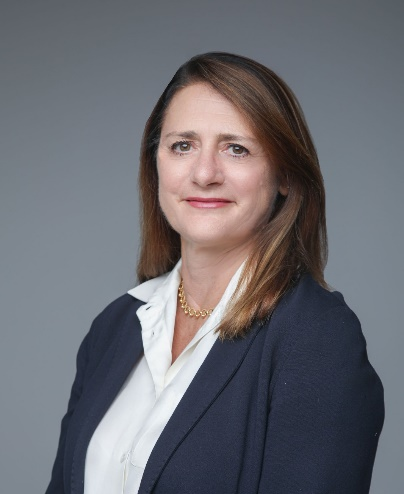
Cecilia Laschi
National University of Singapore
Cecilia Laschi is Provost's Chair Professor of robotics at the National University of Singapore, leading the Soft Robotics Lab. She is Director of the Advanced Robotics Centre (ARC) of NUS and Co-Dire...
Cecilia Laschi is Provost's Chair Professor of robotics at the National University of Singapore, leading the Soft Robotics Lab. She is Director of the Advanced Robotics Centre (ARC) of NUS and Co-Director of CARTIN - Centre for Advanced Robotics Technology and Innovation, funded by NRF. She is on leave from Scuola Superiore Sant'Anna, Italy, The BioRobotics Institute (Dept. of Excellence in Robotics & AI). She graduated in Computer Science at the University of Pisa and received a Ph.D. in Robotics from the University of Genoa. She received an Honorary Doctorate from the University of Southern Denmark, Odense, in 2023. She was JSPS visiting researcher at the Humanoid Robotics Institute of Waseda University, Tokyo, Japan. Cecilia Laschi is best-known for her research in soft robotics, an area that she pioneered and contributed to develop at international level. She investigates fundamental challenges for building robots with soft materials, with a bioinspired approach which started with a study of the octopus as a model for robotics.
Talk Title: Robotics goes soft: challenges and achievements, for new robotics scenarios
Abstract: Largely inspired by the observation of the role of soft tissues in living organisms, the use of soft materials for building robots is recognized as one of the current challenges for pushing the boundaries of robotics technologies and building robotic systems for service tasks in natural environments. The study of living organisms sheds light on principles that can be fruitfully adopted to develop additional robot abilities or to facilitate more efficient accomplishment of tasks, because living organisms exploit soft tissues and compliant structures to move effectively in complex natural environments.
Widely growing worldwide, soft robotics has produced already interesting achievements in terms of technologies for actuation, sensing, control, and many more. In addition to allowing more applications for robots, soft robotics technologies are enabling robot abilities that were not possible before, like morphing, stiffening, growing, self-healing, evolving. They open up new scenarios for robotics that brings towards more life-like robots, effectively and efficiently adaptable to their environments and tasks.
Rethinking robot bodyware contributes to this vision and enables a wider adoption of intelligent machines. A mindful allocation of roles between humans and robots can materialise an acceptable, sustainable, and beneficial human-machine coexistence. -
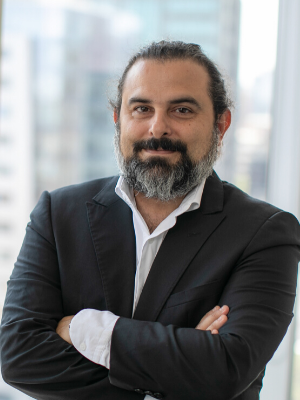
Luis Martí (Online)
Inria Chile
Ph.D. in Applied Artificial Intelligence. Current Scientific Director at Inria Chile, the Chilean center of Inria, the French National Institute for Computational Sciences.
Prior to his current role,...Ph.D. in Applied Artificial Intelligence. Current Scientific Director at Inria Chile, the Chilean center of Inria, the French National Institute for Computational Sciences.
Prior to his current role, he was a senior researcher of the TAU team at Inria Saclay since 2015, an adjunct professor (tenured) at the Institute of Computer Science of the Fluminense Federal University, and a member of the CNPq Young Talent of Science Fellow at the Applied Robotics and Intelligence Lab in the Department of Electrical Engineering of the Pontifical Catholic University of Rio de Janeiro, Brazil. -
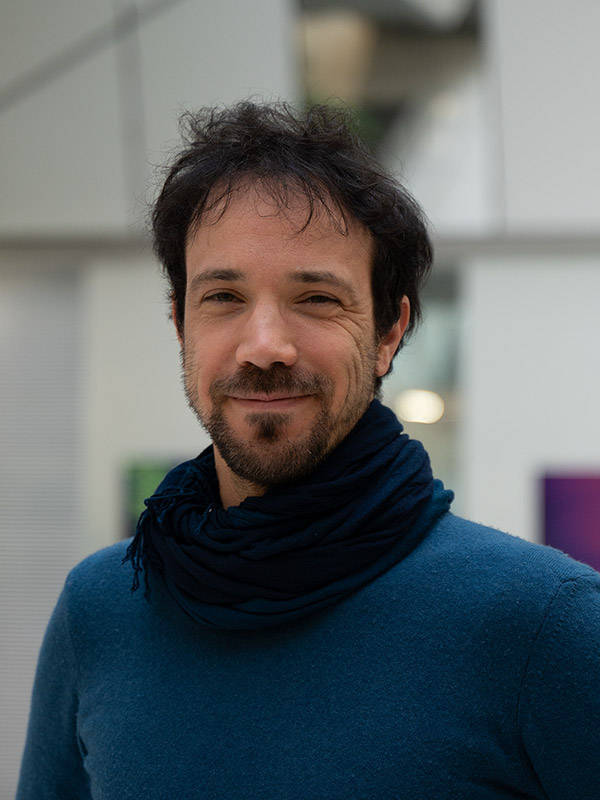
Xavier Hinaut
Inria (Mnemosyne team) & Institute of Neurodegenerative Diseases, Bordeaux France
Xavier Hinaut is a Research Scientist in Bio-inspired Machine Learning and Computational Neuroscience at the Inria Center of the University of Bordeaux, France, since 2016. He received an MSc and Engi...
Xavier Hinaut is a Research Scientist in Bio-inspired Machine Learning and Computational Neuroscience at the Inria Center of the University of Bordeaux, France, since 2016. He received an MSc and Engineering degree from Compiègne Technology University (UTC), FR in 2008, an MSc in Cognitive Science & AI from EPHE, FR in 2019, and then his PhD from Lyon University, FR in 2013. In 2022, he obtained his Habilitation entitled Reservoir SMILES: Sensori-motor Interaction, Language and Embodiment of Symbols. He is currently co-chair of the IEEE CIS Task Force on Reservoir Computing and past chair of the TCDS Language Learning task force. His work is at the frontier of neurosciences, machine learning, robotics, and linguistics: ranging from modeling human sentence processing to analyzing birdsongs and their neural correlates. He both uses reservoirs for machine learning (e.g., birdsong classification) and models (e.g., sensorimotor models of how birds learn to sing). He manages the “DeepPool” ANR project on human sentence modeling with Deep Reservoirs architectures and the Inria Exploratory Action “BrainGPT” on Reservoir Transformers. He is also involved in other multi-lab projects such as the LLM4Code Inria initiative. He leads ReservoirPy development: the most up-to-date Python library for Reservoir Computing. https://github.com/reservoirpy/reservoirpy
Talk Title: Reservoir SMILES: Towards SensoriMotor Interaction of Language and Embodiment of Symbols with Reservoir Architectures
Abstract: Language involves several hierarchical levels of abstraction. Most models focus on a particular level of abstraction making them unable to model bottom-up and top-down processes. Moreover, we do not know how the brain grounds symbols in perceptions and how these symbols emerge throughout development. Experimental evidence suggests that perception and action shape one another (e.g., motor areas are activated during speech perception), but the precise mechanisms involved in this action-perception shaping at various levels of abstraction remain largely unknown.My work includes modeling language comprehension, language acquisition from a robotic perspective, sensorimotor models, and extended models of Reservoir Computing to model working memory and hierarchical processing. I propose creating a new generation of neural-based computational models of language processing and production, utilizing biologically plausible learning mechanisms that rely on recurrent neural networks. This approach involves developing novel sensorimotor mechanisms to account for the shaping of action-perception, building hierarchical models from the sensorimotor to the sentence level, and embodying these models in robots. I aim to model general hierarchical sensorimotor processes; thus, our models are not only relevant to language or vocal learning, but are interesting for a larger set of sensorimotor tasks. I will also present general results on reservoir computing and why it is an interesting framework for modeling cognitive processes, such as working memory. For instance, extended reservoirs could gate information, similar to GRU (Gated Recurrent Units).
-

J. Matias Di Martino
Universidad Católica del Uruguay, Uruguay and Duke University, USA
Full Professor of Informatics and Computer Science at UCU (Uruguay) and an Adjunct Research Professor at Duke University (USA). He has extensive experience researching, educating, and providing profes...
Full Professor of Informatics and Computer Science at UCU (Uruguay) and an Adjunct Research Professor at Duke University (USA). He has extensive experience researching, educating, and providing professional consulting. Matias loves working on AI projects that intersect industry and academia; in particular, his interests include image processing, machine learning, time series analysis, remote sensing, and computer vision. He has taught undergraduate and graduate courses at the university level, led large-scale research projects, and published over 50 peer-reviewed scientific papers in top journals and conferences.
Talk Title: Computer Vision for Robotics
Abstract: We will summarize the recent advances in IA and computer vision and show examples of how this is transforming several domains in robotics, ranging from healthcare to agriculture.
-
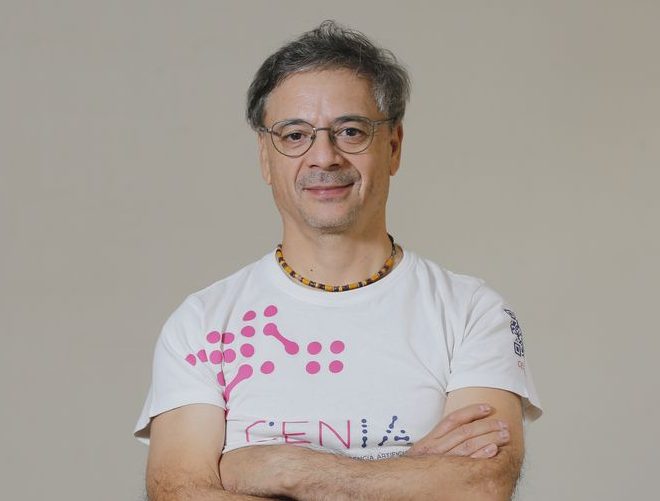
Álvaro Soto
Department of Computer Science at Pontificia Universidad Católica de Chile
Álvaro Soto received his Ph.D. in Computer Science from Carnegie Mellon University in 2002. He joined the Computer Science Department at Pontificia Universidad Católica de Chile (PUC), where he is an ...
Álvaro Soto received his Ph.D. in Computer Science from Carnegie Mellon University in 2002. He joined the Computer Science Department at Pontificia Universidad Católica de Chile (PUC), where he is an Associate Professor. His main research interests include artificial intelligence and cognitive robotics. Since 2021, he has served as the founder and director of the Chilean National Center for Artificial Intelligence, CENIA. He is also a co-founder of Zippedi Inc., a company specializing in the development of robotic technologies for retail.
-
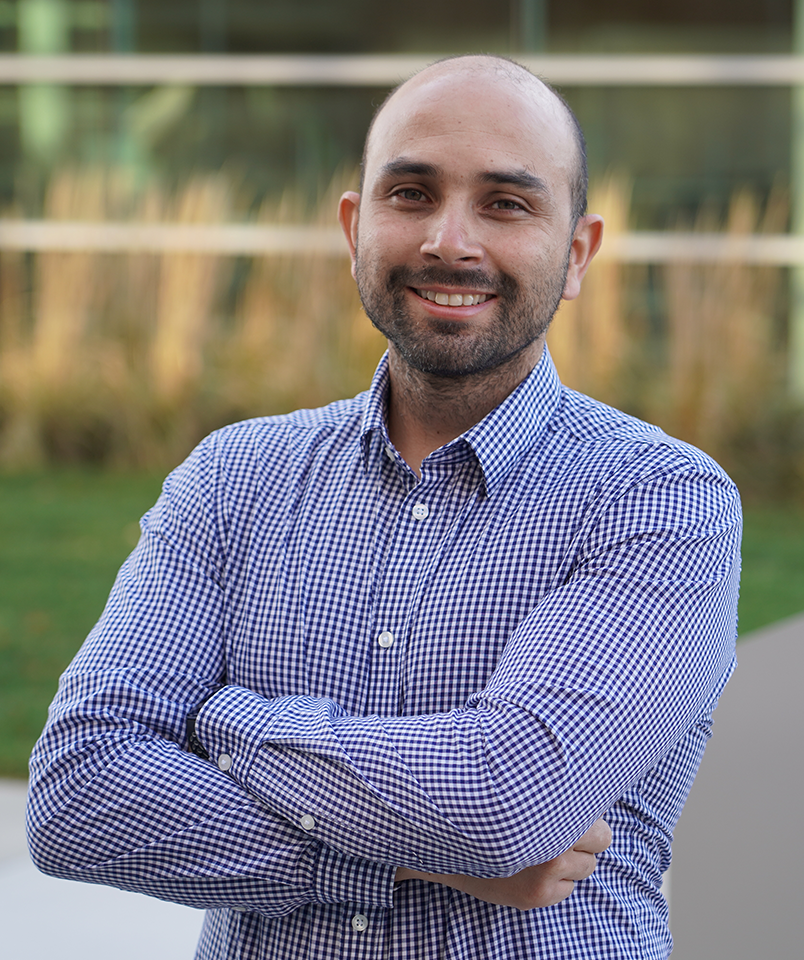
Andrés Arrieta
Purdue University
Dr. Andres F. Arrieta is the Doug and Cathy Field Rising Star Professor of Mechanical Engineering and Professor of Aeronautics and Astronautics Engineering (by courtesy) at Purdue University, where he...
Dr. Andres F. Arrieta is the Doug and Cathy Field Rising Star Professor of Mechanical Engineering and Professor of Aeronautics and Astronautics Engineering (by courtesy) at Purdue University, where he leads the Programmable Structures Lab. Previously, he worked as a Group Leader at ETH Zurich’s CMAS Lab and as a Research Associate at the Dynamics and Oscillations Group at TU Darmstadt. He received his Ph.D. in Mechanical Engineering from the University of Bristol and his BEng from the Universidad de Los Andes, Bogotá, Colombia.
Dr. Arrieta’s research in structural mechanics investigates the fundamental interaction between geometry, hierarchy, and nonlinearity and their role in enabling the design of systems with intrinsic adaptation, autonomy, and environmental responsiveness. His current research focuses on modeling and designing morphing structures, soft robotics, embodied intelligence in structures, nonlinear metamaterials, energy harvesting, and bioinspired design. The Programmable Structures Lab’s work has been highlighted by several media outlets, including National Geographic and Nature’s News and Views.
He has published 69 journal papers and 72 Conference Papers and has delivered over 20 Keynote and Invited Talks in international conferences. His research has been recognized with several awards, including the 2021 inaugural Early Career Award in Smart Materials and Structures (IOP Science); NSF CAREER Award (2020); the American Society of Heating, Refrigerating and Air-Conditioning Engineers (ASHRAE) Innovation Research Grant; the ASME Gary Anderson Award (2018) for “outstanding contributions to the field of Adaptive Structures;” the ETH Postdoctoral Fellowship (2012); and the Oversees Research Scholarship for his doctoral studies in 2007.
Talk Title: Embodying mechanical intelligence from multistability
Abstract: Recently, metamaterials have been used to process information by exploiting their ability to change shape and stiffness, conform to different bodies, and complement binary-based mechanical computing by introducing concurrent information processing and memory formation, similar to the processes in physical reservoir computers. A specific class of metamaterials featuring dome-shaped units exhibit order-dependent or non-Abelian deflections reminiscent of spin glasses, a type of condensed matter exhibiting strong state degeneracy (multiple energy minima), the mechanics of which enable in-material memory and computation. This state degeneracy stems from the inability to simultaneously minimize all the local interactions due to deformation incompatibilities or constraints, a phenomenon known as geometrical frustration. Appropriate design of geometrical frustration allows for accommodating these local incompatibilities, whereby the accumulated collective deflections result in substantial three-dimensional reshaping while maintaining low strains.
We show how exploiting the interplay between geometry and constraints allows for leveraging the resulting strong state degeneracy or multistability in dome-patterned structures to embody intelligence into morphing systems purely from mechanics. We illustrate intelligence from geometrical frustration via pneumatically actuated soft systems with encoded multiple accessible, stable states that offer a route to open-loop shape reconfiguration. Informed by the mechanics of multistable metamaterials, we design coexisting states resembling different actuation modes in soft structures. We achieve this by leveraging distinct path-dependent activation sequences to access desired coexisting states. We demonstrate how to describe this system as a temporal finite-state machine that yields different output shapes depending on the recorded sequence. Our strategy offers a new route for controlling soft robots, exploiting the nonlinear mechanics of multistable structures to the designer's advantage, thus opening the avenue for embodying finite-state machine-based control strategies without closed-loop feedback for soft structures. -
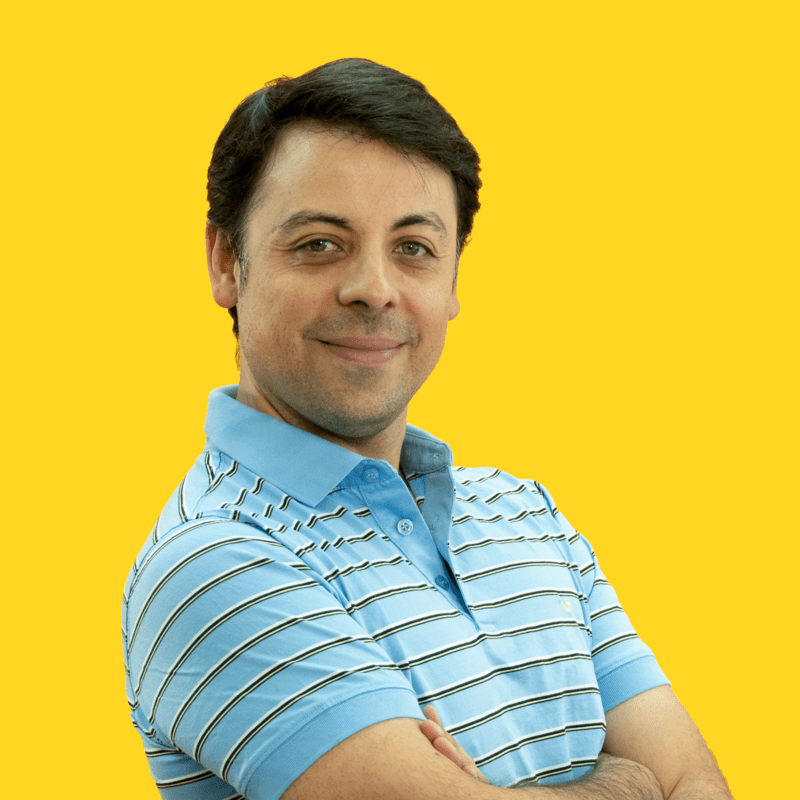
Julio Godoy del Campo
Departamento de Ingeniería Informática y Cs. de la Computación, Universidad de Concepción, Chile
Julio Godoy is an associate professor in the department of Computer Science at Universidad de Concepción. His research interests span multiple areas of artificial intelligence, recently focusing on re...
Julio Godoy is an associate professor in the department of Computer Science at Universidad de Concepción. His research interests span multiple areas of artificial intelligence, recently focusing on reinforcement learning and its application in robotics and games. Together with his research team, he has worked in artificial intelligence methods for the multi-agent navigation problem, and is currently working on transferring such methods to multi-robot settings.
Talk Title: Robotics@UdeC: From a chess playing Baxter to polite Turtlebots
Abstract: In this talk, I will present the work of my research group that spans a variety of areas in robotics: computer vision, navigation, dexterity, human-robot interaction and multi robot coordination. Then, I will discuss some possible ideas for extending these works.
-
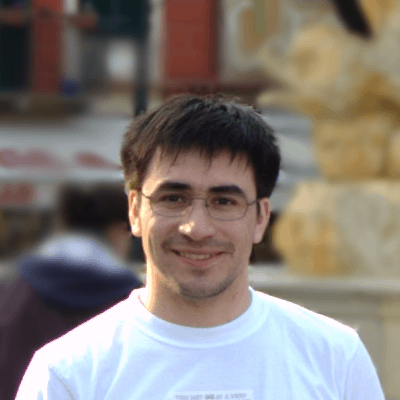
Nicolás Navarro-Guerrero
L3S Research Center, Leibniz Universität Hannover, Germany
Nicolás Navarro-Guerrero is a roboticist focusing on cognitive and AI aspects of robotics. His interest lies in understanding cognitive processes and their application to developing increasingly auton...
Nicolás Navarro-Guerrero is a roboticist focusing on cognitive and AI aspects of robotics. His interest lies in understanding cognitive processes and their application to developing increasingly autonomous and safer interactive intelligent systems for industrial and assistive purposes. He studied Electronic Engineering at the Universidad Técnica Federico Santa María, Valparaíso, Chile. In 2016, he completed a Ph.D. in Computer Science at the University of Hamburg (Germany). He is a co-founder and board member of the Latin American Summer School on Robotics (LACORO) board.
Talk Title: Towards Dexterous Manipulation: From Teleoperation to Autonomous Learning
Abstract: The object perception capabilities of humans are impressive, and this becomes even more evident when trying to develop solutions with similar proficiency in autonomous robots. While there have been notable advancements in technologies for artificial vision and touch, the effective integration of these two sensory modalities in robotic applications still needs improvement, and several open challenges remain. This talk summarizes the current state of the art in visuo-haptic object perception for robots, identifies open challenges, and presents some of my ongoing research in the area.